Our Law Firm Blog

A slip and fall can happen in seconds, but the consequences can last for weeks, months, or even years. If you fall at a grocery store, shopping centre, restaurant, office building, retail store, parking lot, or another commercial property in Ontario, what you do immediately afterward may be important for both your health and your ability to pursue a potential personal injury claim. Commercial property slip and fall cases can involve multiple parties, including property owners, tenants, property managers, maintenance companies, and snow-removal contractors. Evidence can also disappear quickly. A spill may be cleaned, snow may be removed, surveillance footage may be overwritten, and witnesses may become difficult to locate. Knowing what steps to take can help protect you. 1. Get Medical Attention Your health should be the first priority. If you are seriously injured, cannot safely stand, hit your head, experience severe pain, or believe you may have suffered a significant injury, request emergency medical assistance. Even when an injury initially seems minor, consider obtaining medical attention as soon as reasonably possible. Some injuries may not be immediately apparent after a fall. Adrenaline and shock can temporarily mask pain, and symptoms associated with certain soft-tissue injuries or head injuries may develop later. Medical records can also document when symptoms began, what injuries were identified, and what treatment was recommended. Follow your healthcare provider's treatment recommendations and attend scheduled follow-up appointments. 2. Report the Accident Immediately Tell the property owner, manager, security department, store manager, or another appropriate representative that you fell. Ask that an incident report be prepared. Provide accurate information about where and when the accident occurred, but avoid guessing about facts you do not know. If possible, obtain the name and contact information of the person who receives your report. You may also ask for a copy of the incident report or information about how you can obtain one. Reporting the accident promptly creates a record that the incident occurred and alerts the business or property manager to the location of the accident. 3. Photograph and Record the Hazard If you are physically able to do so safely, photograph the area before conditions change. This can be particularly important because the hazard responsible for a fall may disappear shortly afterward. For example, photograph conditions such as: Water or another liquid on a floor Snow or ice Uneven pavement Damaged flooring Broken stairs Loose mats or carpeting Debris in a walkway Poorly maintained entrances Inadequate lighting Missing or damaged handrails Take both close-up and wider photographs. Wider photographs can establish where the hazard was located in relation to entrances, aisles, stairs, parking areas, or other landmarks. If weather contributed to an outdoor accident, photographs showing the general conditions may also be useful. 4. Identify Witnesses If someone saw you fall—or observed the dangerous condition before or after the accident—ask for their name and contact information. Do not assume that the commercial property will collect this information for you. Independent witnesses may later provide valuable information about what happened, what the property looked like, how long a hazard may have existed, or what occurred immediately following your fall. If someone accompanied you, ask them to make their own notes about what they observed while the details are still fresh. 5. Preserve Your Clothing and Footwear Do not immediately throw away the shoes or clothing you were wearing when you fell. Your footwear could become relevant to questions about how the accident occurred. Clothing may also show damage, moisture, dirt, or other evidence associated with the incident. Keep these items in a safe place rather than continuing to use them extensively. 6. Write Down Exactly What Happened Memories fade surprisingly quickly. As soon as you are able, write down everything you remember about the accident. Record the date, approximate time, exact location, weather conditions if relevant, lighting, the condition that caused you to fall, where you landed, who assisted you, witnesses who were present, and any conversations you had with employees or management. Also document your symptoms and how your injuries affect your daily activities afterward. These notes may help you recall important details months later. 7. Be Careful About Statements and Social Media Following an accident, you may be contacted by an insurer, property representative, or another party seeking information. Be accurate, but remember that you may not yet know the full extent of your injuries or all the circumstances surrounding the accident. Consider obtaining legal advice before providing detailed recorded statements or signing documents relating to the incident. You should also think carefully before posting photographs, videos, activity updates, or comments about the accident on social media. Information posted online may potentially become relevant in a personal injury dispute. 8. Ask That Surveillance Footage Be Preserved Many commercial properties use security cameras. Video footage may show the fall itself, the condition of the area before the accident, employees inspecting or cleaning the location, or how long a hazard existed. However, surveillance systems do not necessarily retain footage indefinitely. A lawyer can assess whether steps should be taken to request preservation of relevant surveillance footage and other records, including inspection logs, cleaning records, maintenance reports, and incident documentation. Acting promptly can therefore be important. 9. Understand Ontario's Occupiers' Liability Rules Ontario's Occupiers' Liability Act generally requires an occupier of premises to take reasonable care in the circumstances to see that people entering the premises are reasonably safe. An "occupier" can include a person in physical possession of the premises or someone with responsibility and control over its condition or activities. ( Ontario ) This does not mean that a commercial property owner is automatically liable whenever someone falls. The circumstances surrounding the accident matter. Questions may include what caused the fall, whether the condition presented an unreasonable risk, what inspection or maintenance procedures were in place, and what the parties reasonably did in the circumstances. Determining responsibility can also become complicated when several companies are involved in operating and maintaining a property. 10. Don't Ignore the 60-Day Snow and Ice Notice Requirement This is especially important for Ontario slip and fall claims involving snow or ice. Under Ontario's Occupiers' Liability Act, a person seeking damages for a personal injury caused by snow or ice generally must provide written notice of the claim within 60 days after the injury occurs. The notice must include the date, time, and location of the occurrence and must be personally served or sent by registered mail to an occupier or applicable snow/ice removal contractor. The legislation provides certain exceptions, but you should not assume that an exception will apply. ( Ontario ) This short notice period is one reason it can be important to obtain legal advice quickly after a winter slip and fall. 11. Be Aware of Ontario's Limitation Period Separate from the 60-day snow-and-ice notice requirement, Ontario's Limitations Act, 2002 establishes a basic limitation period that generally prevents a proceeding from being commenced after the second anniversary of the date the claim was discovered. The Act contains specific rules governing when a claim is considered discovered, as well as exceptions and other provisions that can affect limitation periods. ( Ontario ) Because deadlines can depend on the circumstances, waiting until a limitation date approaches can create unnecessary risk. Speak With Benjamin Law About Your Slip and Fall A serious slip and fall can affect your ability to work, care for your family, participate in normal activities, and maintain your independence. You may also face medical, rehabilitation, and other expenses while dealing with pain and limitations caused by your injuries. If you were injured after slipping or falling on commercial property in Ontario, consider obtaining legal advice as soon as possible. Benjamin Law can review the circumstances surrounding the accident, help identify potentially responsible parties, assess applicable deadlines, and explain the legal options that may be available to you. Early action may also provide an opportunity to preserve evidence before conditions change, surveillance footage disappears, or witnesses become difficult to locate. Injured in a slip and fall on commercial property? Contact Benjamin Law to schedule a consultation and learn about your legal options. Benjamin Law Personal Injury Lawyers 🌐 www.benjaminlaw.ca 📞 (416) 736-4994 This article provides general information about Ontario law and is not intended as legal advice. Legal rights and deadlines depend on the circumstances of each case.

Nếu quý vị lái xe ở Ontario, tấm hợp đồng bảo hiểm nằm trong ngăn xe của quý vị có thể không bao gồm những gì quý vị nghĩ. Vào ngày 1 tháng 7 năm 2026, Ontario đã chuyển sang hệ thống bảo hiểm xe hơi "tự chọn" (à la carte) mới — một hệ thống cho tài xế nhiều lựa chọn hơn về phí bảo hiểm, nhưng cũng chuyển phần lớn rủi ro tài chính sang cho bất kỳ ai gặp tai nạn xe cộ. Tại Benjamin Law, chúng tôi đã dành hơn 30 năm để giúp người dân Ontario bị thương đấu tranh cho những quyền lợi mà họ xứng đáng được nhận. Cuộc cải cách này là một trong những thay đổi quan trọng nhất ảnh hưởng đến nạn nhân tai nạn trong nhiều năm qua, nhưng hầu hết tài xế đều không biết điều này đã xảy ra. Dưới đây là những gì quý vị cần biết trước khi rơi vào tình huống phải tìm hiểu theo cách khó khăn. Bức Tranh Tổng Quan: Sự Lựa Chọn Đi Kèm Với Rủi Ro Theo hệ thống cũ, một hợp đồng bảo hiểm xe hơi tiêu chuẩn đi kèm với một loạt quyền lợi tai nạn rộng rãi — bồi thường thu nhập, hỗ trợ người chăm sóc, hỗ trợ việc nhà, và nhiều hơn nữa — tất cả đều được bao gồm sẵn. Mô hình "tự chọn" mới tách rời gói quyền lợi này ra. Tài xế giờ đây có thể chọn lựa quyền lợi nào để thêm vào hợp đồng, điều này có thể giúp giảm phí bảo hiểm ban đầu. Nhưng có một điểm mấu chốt: nếu quý vị không chọn tham gia một quyền lợi khi mua hợp đồng, quyền lợi đó sẽ đơn giản là không có nếu quý vị gặp tai nạn — dù quý vị cần đến mức nào. Những Gì Vẫn Bắt Buộc So Với Những Gì Giờ Là Tùy Chọn Chỉ có một loại quyền lợi vẫn bắt buộc trên mọi hợp đồng bảo hiểm xe hơi ở Ontario: chăm sóc y tế, phục hồi chức năng và chăm sóc hỗ trợ (attendant care) . Điều này bao gồm chăm sóc sức khỏe thiết yếu và vật lý trị liệu sau tai nạn, và thực ra có một thay đổi tích cực ở đây (sẽ nói thêm bên dưới). Mọi thứ khác vốn từng đi kèm sẵn giờ đây là tùy chọn thêm. Kể từ ngày 1 tháng 7 năm 2026, các quyền lợi sau đây là tùy chọn — nghĩa là chúng chỉ áp dụng nếu quý vị đã mua riêng: Quyền Lợi Bao Gồm Những Gì Bồi Thường Thu Nhập (IRB) Bù đắp thu nhập bị mất nếu quý vị không thể làm việc do tai nạn Quyền Lợi Người Chăm Sóc Chi trả chi phí thuê người chăm sóc người phụ thuộc trong khi quý vị hồi phục Quyền Lợi Người Không Có Thu Nhập Hỗ trợ tài chính nếu quý vị không có thu nhập nhưng bị tổn thương vĩnh viễn Việc Nhà & Bảo Trì Nhà Cửa Chi trả cho việc thuê người giúp duy trì nhà cửa trong thời gian hồi phục Chi Phí Tang Lễ & Tử Vong Khoản chi trả một lần cho người thân và chi phí mai táng Chăm Sóc Người Phụ Thuộc / Điều Chỉnh Theo Lạm Phát Chi phí giữ trẻ thêm và điều chỉnh quyền lợi hàng năm theo lạm phát Hãy nghĩ về ý nghĩa thực tế của điều này. Nếu quý vị bị thương nặng vào ngày mai và chỉ có mức bảo hiểm tối thiểu bắt buộc, quý vị có thể được điều trị y tế và phục hồi chức năng — nhưng sẽ không có gì để bù đắp thu nhập bị mất, không có gì giúp trả tiền chăm sóc con cái, và không có gì chi trả việc nhà trong khi quý vị đang hồi phục. Ngay cả một chấn thương thảm khốc cũng không còn tự động mở khóa các quyền lợi này nữa. Nếu quý vị không mua bảo hiểm đó, nó sẽ không tồn tại. Một Thay Đổi Thực Sự Có Lợi: Quy Tắc "Người Chi Trả Đầu Tiên" Không phải mọi thứ trong cuộc cải cách này đều bất lợi cho tài xế. Có một thay đổi quan trọng có lợi cho quý vị: kể từ ngày 1 tháng 7 năm 2026, bảo hiểm xe hơi của quý vị giờ đây chi trả trước cho chi phí y tế và phục hồi chức năng sau tai nạn — trước cả bảo hiểm y tế tư nhân hoặc bảo hiểm của nơi làm việc, như Sun Life hay Canada Life. Trước đây, người bị thương phải dùng hết quyền lợi bảo hiểm tư nhân trước khi công ty bảo hiểm xe hơi chi trả bất kỳ khoản nào. Gánh nặng đó giờ đã được đảo ngược, điều này có nghĩa là nhiều nạn nhân tai nạn sẽ được tiếp cận điều trị nhanh hơn. Bảo Hiểm Không Còn Tự Động Đi Theo Quý Vị Có lẽ phần bị bỏ sót nhiều nhất trong cuộc cải cách này là ai thực sự được bảo vệ bởi các quyền lợi tùy chọn. Theo các quy định mới, bảo hiểm tùy chọn được mua sau ngày 1 tháng 7 năm 2026 chỉ áp dụng cho người được bảo hiểm chính, vợ/chồng của họ, những người phụ thuộc được liệt kê, và những tài xế được nêu tên cụ thể trên hợp đồng đó. Điều này có hậu quả thực sự đối với bất kỳ ai không phải là chủ hợp đồng: Người đi bộ và người đi xe đạp bị xe đâm sẽ không tự động nhận được các quyền lợi tùy chọn của tài xế, ngay cả khi tài xế đó đã mua bảo hiểm đầy đủ. Hành khách trong xe của người khác cũng ở trong tình huống tương tự — họ không thừa hưởng quyền lợi tùy chọn của tài xế. Bất kỳ ai lái xe với sự đồng ý của chủ xe , nhưng không được nêu tên trên hợp đồng, cũng bị loại khỏi các quyền lợi tùy chọn. Trong mỗi trường hợp trên, người đó thường phải dựa vào hợp đồng bảo hiểm xe hơi của chính họ — và nếu hợp đồng đó chỉ có mức tối thiểu bắt buộc, họ sẽ chỉ được giới hạn ở quyền lợi y tế và phục hồi chức năng, bất kể tai nạn xảy ra như thế nào hay chấn thương nghiêm trọng ra sao. Tại Sao Điều Này Quan Trọng Đối Với Tài Xế Ontario Đây là thực tế thực tiễn: hai người có thể gặp cùng một loại tai nạn và kết thúc ở những vị trí tài chính rất khác nhau sau đó, hoàn toàn dựa trên việc họ đã chọn những gì khi mua hợp đồng — hoặc liệu họ có đang lái xe của chính mình hay không. Người chỉ có mức tối thiểu bắt buộc, bị thương nặng và không thể làm việc, có thể phải tìm đến bảo hiểm khuyết tật tư nhân (như bảo hiểm khuyết tật ngắn hạn hoặc dài hạn) hoặc các chương trình của chính phủ như trợ cấp ốm đau EI, Ontario Works, ODSP, hoặc CPP Disability chỉ để trang trải cuộc sống. Đây chính là lý do tại sao việc hiểu rõ hợp đồng bảo hiểm của mình trước khi tai nạn xảy ra lại quan trọng đến vậy. Và nếu quý vị đã gặp tai nạn và không chắc mình được hưởng quyền lợi gì, vẫn chưa muộn để tìm hiểu rõ ràng — nhưng quý vị càng sớm biết mình đang đứng ở đâu, quý vị càng có vị thế tốt hơn để bảo vệ quyền lợi của mình. Xin lưu ý rằng những thay đổi này áp dụng cụ thể cho các hợp đồng bảo hiểm xe hơi được mua vào hoặc sau ngày 1 tháng 7 năm 2026. Nếu hợp đồng của quý vị được cấp trước ngày đó, các quy định cũ vẫn tiếp tục được áp dụng. Benjamin Law Có Thể Giúp Gì Cho Quý Vị Chúng tôi áp dụng phương pháp "giáo dục là trên hết", nghĩa là trước khi nói về một vụ khiếu nại, chúng tôi đảm bảo quý vị thực sự hiểu hợp đồng của mình — những gì được bảo hiểm, những gì không, và các lựa chọn của quý vị dựa trên các quy định mới. Dù quý vị đang cố tìm hiểu nên mua bảo hiểm nào, hay đã bị thương và cần biết mình có thể yêu cầu bồi thường gì, đội ngũ của chúng tôi luôn sẵn sàng hướng dẫn quý vị từng bước. Nếu quý vị không chắc chắn hợp đồng bảo hiểm xe hơi của mình thực sự bao gồm những gì, đừng đợi đến sau khi tai nạn xảy ra mới tìm hiểu. Liên hệ Benjamin Law ngay hôm nay để được tư vấn miễn phí: Sandy Chau — 416-830-3653 (Phục vụ 24/7) benjaminlaw.ca Bài viết này chỉ nhằm mục đích cung cấp thông tin chung và không phải là tư vấn pháp lý. Các hợp đồng bảo hiểm khác nhau, và quyền lợi của quý vị phụ thuộc vào phạm vi bảo hiểm cụ thể và hoàn cảnh của quý vị. Vui lòng liên hệ Benjamin Law để được tư vấn về trường hợp của quý vị.
If you drive in Ontario, the insurance policy sitting in your glovebox may not cover what you think it does. On July 1, 2026, Ontario moved to a new "à la carte" auto insurance system — one that gives drivers more choice over their premiums, but also shifts significant financial risk onto anyone involved in a motor vehicle accident. At Benjamin Law, we've spent over 30 years helping injured Ontarians fight for the benefits they're owed. This overhaul is one of the most consequential changes to hit accident victims in years, and most drivers have no idea it happened. Here's what you need to know before you're ever in a position to find out the hard way. The Big Picture: Choice Comes With Risk Under the old system, a standard auto policy came bundled with a broad set of accident benefits — income replacement, caregiver support, housekeeping help, and more — all included as a matter of course. The new "à la carte" model breaks that bundle apart. Drivers can now pick and choose which benefits to add to their policy, which can mean lower premiums up front. But there's a catch: if you don't opt into a benefit when you buy your policy, it simply won't be there if you're ever hurt in a crash — no matter how badly you need it. What's Still Mandatory vs. What's Now Optional Only one category of benefit remains mandatory on every Ontario auto policy: medical, rehabilitation, and attendant care . This covers essential healthcare and physical therapy after an accident, and there's actually a positive change here too (more on that below). Everything else that used to come standard is now an add-on. As of July 1, 2026, the following benefits are optional — meaning they only apply if you specifically purchased them: Benefit What It Covers Income Replacement Benefit (IRB) Replaces lost wages if you can't work due to an accident Caregiver Benefits Covers the cost of hiring care for your dependents while you recover Non-Earner Benefits Financial support if you don't earn an income but suffer a permanent impairment Housekeeping & Home Maintenance Pays for help maintaining your home during recovery Death & Funeral Expenses Lump-sum payouts to survivors and burial cost coverage Dependent Care / Indexing Extra childcare costs and annual inflation adjustments to benefits Think about what that means in practice. If you were seriously injured tomorrow and only carried the mandatory minimum, you could receive medical and rehab treatment — but nothing to replace your lost income, nothing to help pay someone to care for your kids, and nothing to cover housekeeping while you're laid up. Even a catastrophic injury doesn't automatically unlock these benefits anymore. If you didn't buy the coverage, it isn't there. A Rule Change That Actually Helps: "First Payer" Not everything about the overhaul cuts against drivers. One important change works in your favour: as of July 1, 2026, your auto insurance now pays first for medical and rehabilitation costs after a crash — ahead of any private or workplace health plan, like Sun Life or Canada Life. Previously, injured people had to exhaust their private benefits before their auto insurer would pay a dollar. That burden has been reversed, which should mean faster access to treatment for many accident victims. Coverage No Longer Follows You Automatically Perhaps the most overlooked part of this overhaul is who the optional benefits actually protect. Under the new rules, optional coverage purchased after July 1, 2026 applies only to the named insured, their spouse, listed dependents, and specifically named drivers on that policy. That has real consequences for anyone who isn't the policyholder: Pedestrians and cyclists struck by a vehicle will not automatically receive the driver's optional benefits, even if that driver purchased robust coverage. Passengers in someone else's vehicle are in the same position — they don't inherit the driver's optional coverage. Anyone driving with the owner's consent , but not named on the policy, is also excluded from optional benefits. In each of these situations, the person generally has to fall back on their own auto insurance policy — and if that policy only carries the mandatory minimum, they're limited to medical and rehab benefits only, regardless of how the accident happened or how serious their injuries are. Why This Matters for Ontario Drivers Here's the practical reality: two people can be involved in the exact same type of accident and end up in very different financial positions afterward, purely based on what boxes they checked when they bought their policy — or whether they were driving their own car at all. Someone with only the mandatory minimum, seriously injured and unable to work, may have to turn to private disability insurance (like short-term or long-term disability coverage) or government programs such as EI sickness benefits, Ontario Works, ODSP, or CPP Disability just to stay afloat. This is precisely why understanding your policy before an accident happens matters so much. And if you've already been in a crash and aren't sure what you're entitled to, it's not too late to get clarity — but the sooner you know where you stand, the better positioned you are to protect your rights. Note that these changes apply specifically to auto insurance policies purchased on or after July 1, 2026. If your policy was issued before that date, the previous rules continue to apply. How Benjamin Law Can Help We take an education-first approach, which means before we talk about a claim, we make sure you actually understand your policy — what's covered, what isn't, and what your options are given the new rules. Whether you're trying to figure out what coverage to buy, or you've already been injured and need to know what you can claim, our team is here to walk you through it step by step. If you're unsure what your auto policy actually covers, don't wait until after an accident to find out. Contact Benjamin Law today for a free consultation: 416-736-4994 | benjaminlaw.ca This article is provided for general informational purposes only and does not constitute legal advice. Insurance policies vary, and your rights depend on your specific coverage and circumstances. Contact Benjamin Law for advice about your situation.
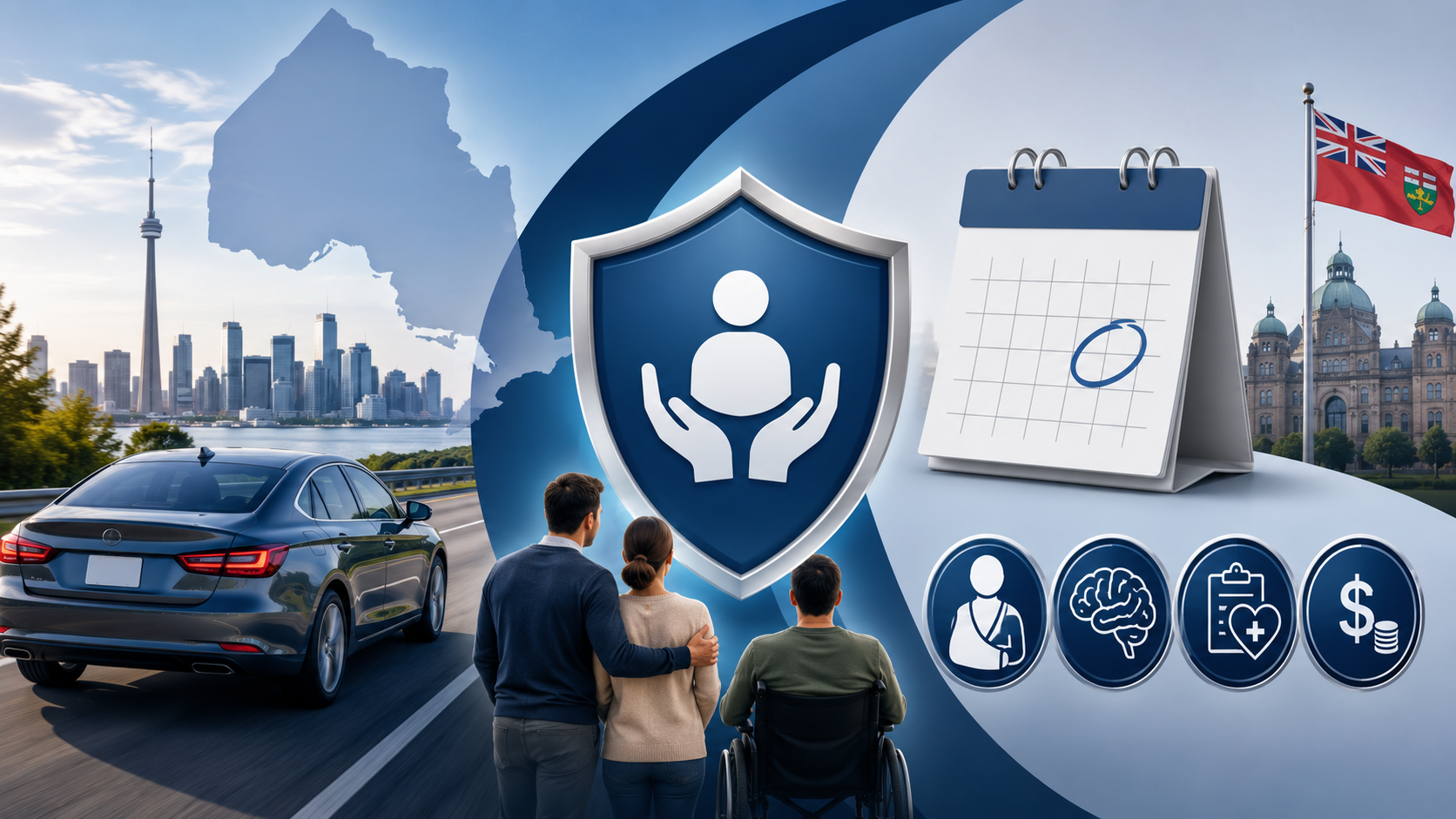
A major regulatory shift to Ontario's auto insurance framework took effect on July 1, 2026 , and it fundamentally changes what happens to your financial security after a motor vehicle collision. Under Ontario's updated Statutory Accident Benefits Schedule (SABS) Reform, crucial protections—most notably Income Replacement Benefits (IRBs) —are no longer automatically included in new auto insurance policies. For anyone navigating a personal injury claim, understanding these changes is vital to preventing sudden and devastating financial hardship. At Benjamin Law , we believe that proactive education is the best defense. Here is what every driver in the Greater Toronto Area (GTA) needs to know about the new auto insurance landscape, how it impacts personal injury claims, and why legal guidance matters more than ever. Understanding the SABS Reform: What Has Changed? Historically, if an injured driver was unable to work due to a car accident, Ontario's standard auto insurance policies automatically provided a safety net. Claimants could receive up to 70% of their gross pre-accident income (up to $400 per week under standard baseline provisions) to help cover mortgage payments, rent, and groceries while they healed. Effective July 1, 2026 , that automatic protection is gone for new policies. Under the province's transition to a consumer-choice model, only basic medical, rehabilitation, and attendant care benefits remain mandatory in a standard policy. All other vital supports—including Income Replacement Benefits, Non-Earner Benefits, Caregiver Benefits, and Housekeeping/Home Maintenance —have shifted to an "opt-in" basis. The Hidden Risks for Drivers No Automatic Assumptions: If you are purchasing a brand-new auto insurance policy, do not assume your income is protected . If you have not actively chosen, paid for, and opted into Income Replacement Benefits, you will receive $0 in weekly wage support from your auto insurer if you are sidelined by an auto accident. Vulnerable Road Users: The scope of who optional benefits cover has also tightened. Under the 2026 framework, optional benefits tied to a policy strictly protect the named insured, their spouse, registered dependents, and listed drivers. The "First-Payor" Shift: While auto insurance now acts as the primary payer for medical and rehabilitation treatments ahead of private or workplace health plans, the loss of automatic income replacement places an unprecedented burden on personal savings and long-term financial planning. The Direct Impact on Personal Injury Claims For individuals hurt in a collision, these regulatory changes introduce a new layer of complexity to personal injury law. In the wake of a serious auto accident, victims face physical trauma, extensive rehabilitation, and mounting household bills. Previously, SABS provided immediate, no-fault financial interim relief while personal injury lawyers built a tort claim against the at-fault driver. With IRBs now requiring an upfront, intentional choice during policy selection, an underinsured driver who suffers catastrophic or long-term disabling injuries may find themselves completely stripped of weekly income support. Consequently, injured victims may experience immediate destitution, forcing them to rely heavily on personal savings, run up high-interest debt, or prematurely settle complex litigation out of sheer financial desperation. This reality makes reviewing your insurance declarations page with an expert eye more critical than ever before signing or renewing your next policy. Benjamin Law: A Family-First Approach to Justice Navigating the aftermath of a motor vehicle collision requires more than just legal paperwork—it demands a fierce, compassionate advocate who treats you like family. Based in the Greater Toronto Area (GTA), Benjamin Law has established itself as a premier legal firm specializing in personal injury and long-term disability claims. Founded by Anthony Stephen Benjamin , the firm operates on a foundational belief that every individual deserves high-quality representation, regardless of the complexity of their case or the size of the opposing insurance company. Advocacy Born from Experience The firm’s mission is deeply rooted in Anthony Benjamin’s professional history. While working at the Financial Services Committee with the Attorney General of Ontario, Anthony observed a significant gap in how claimants were treated by insurance providers. He witnessed firsthand the systemic neglect and mistreatment of visual minorities and immigrants within the legal and insurance sectors. Motivated to rectify these inequalities, he founded Benjamin Law to serve as a shield for those who might otherwise be intimidated by the daunting litigation process. Proven Results and Diverse Expertise With over 30 years of experience, Anthony Stephen Benjamin leads a team that combines deep industry knowledge with a fresh, breakthrough perspective. The firm’s track record is a testament to its effectiveness: 3,500+ Families Helped: A focus on restorative justice for families across the GTA. $60M+ Recovered: Significant settlements that provide clients with the financial stability needed to move forward. While the firm is widely recognized for its work in Personal Injury and Long-Term Disability, their expertise extends into a diverse range of practice areas, including Employment Law, Real Estate Law, Wills and Estates, and Caribbean Pension and Labour law. The Benjamin Law Difference What sets Benjamin Law apart is its "education-first" approach . Recognizing that legal battles and insurance reforms cause immense financial and emotional strain, the team provides meticulous, step-by-step guidance to mitigate risks and hardships. By prioritizing client education, they empower individuals to understand their rights and the trajectory of their cases. The firm describes itself as a "family of lawyers," fostering a supportive, coaching-oriented environment that stands in stark contrast to the cold, impersonal nature of large-scale litigation. This unique blend of compassionate, family-oriented service and aggressive, expert advocacy has made Benjamin Law one of the most trusted names for legal representation in the Greater Toronto Area. Protect Your Future Today Knowledge today can prevent financial hardship tomorrow. Do not wait until an accident happens to find out what gaps exist in your auto insurance policy. Take the time to audit your coverage, speak with your insurance broker about opting into essential accident benefits, and ensure your livelihood remains secure. If you have questions about your rights after an auto accident, need help evaluating a complex insurance policy, or require robust advocacy for a personal injury claim, book your consultation with Benjamin Law Firm today . Our experienced legal team is here to help you understand your options, protect your rights, and fight for the compensation you deserve.

The Convergence of Colliding Claims Navigating the Post-Accident Insurance Maze Being involved in a serious road collision in Ontario is a highly disruptive event. Whether you were driving a personal vehicle, riding as a passenger, walking as a pedestrian, or cycling through the busy streets of the Greater Toronto Area, the physical trauma of a crash is immediately accompanied by profound financial anxiety. The foremost concern for most injured individuals revolves around income replacement. When catastrophic or severe injuries prevent you from returning to your place of employment, the sudden loss of regular earnings can quickly place your mortgage, household expenses, and rehabilitation needs in jeopardy. Navigating the recovery process becomes exponentially more difficult when you realize that multiple insurance systems may apply to your situation simultaneously. Many Ontarians are fortunate to have private or employer-sponsored group Long-Term Disability (LTD) insurance plans in addition to the mandatory coverage built into their standard Ontario automobile insurance policies. However, understanding how these distinct programs interact, coordinate, and offset one another is notoriously complex. To secure your financial future, you must understand the dual pathways of recovery and learn how to prevent insurance companies from minimizing your legitimate claims. The Baseline of Support: Understanding Ontario SABS No-Fault Statutory Accident Benefits In Ontario, if your injury involved an automobile in any capacity, your initial line of financial protection comes from the Statutory Accident Benefits Schedule, commonly referred to as SABS. This is a mandatory, no-fault coverage built into every standard auto insurance policy in the province. The term "no-fault" is highly significant because it means you are entitled to access these benefits regardless of who caused the collision. Even if the crash was entirely your fault, or if you were a pedestrian struck by an unidentified driver, you are legally entitled to claim SABS. Under the standard SABS framework, the primary benefit designed to address lost employment income is the Income Replacement Benefit (IRB). While this benefit is crucial, it is subject to strict statutory limits. The standard IRB pays seventy percent of your pre-accident gross weekly income, but it is capped at a baseline maximum of only $400 per week. Unless you proactively purchased optional upgraded coverage prior to your accident, this $400 weekly cap is the absolute maximum your automobile insurer will pay, which translates to roughly $1,733 per month. For the vast majority of working Ontarians, this baseline is simply not enough to cover the basic cost of living in the Greater Toronto Area. Introducing the Ontario Accident Benefits Calculator Because the math surrounding SABS, medical rehab limits, and income calculations can be incredibly confusing during a time of physical recovery, Benjamin Law has developed the Ontario Accident Benefits Calculator. This interactive digital tool is specifically designed to strip away the administrative complexity and provide you with an immediate, reliable estimation of your baseline SABS entitlements. By inputting basic parameters regarding your employment status, pre-accident earnings, and the nature of your accident, the calculator generates a clear projection of your baseline SABS Income Replacement Benefits and your corresponding medical and rehabilitation limits. Utilizing this tool is the vital first step in your recovery process. It provides you with the hard data required to understand your financial starting point before you begin coordinating with private long-term disability providers or pursuing further legal action. The Dual Prongs of Recovery: SABS, LTD, and Tort Long-Term Disability (LTD) to the Rescue When the baseline SABS Income Replacement Benefit of $400 per week leaves a massive structural shortfall in your household budget, your private or group Long-Term Disability (LTD) policy becomes your secondary line of defense. LTD policies are designed to replace a much larger portion of your income, typically covering between sixty and seventy percent of your gross pre-disability earnings. If you earn $1,500 per week, seventy percent of your income is $1,050. Because your automobile insurance SABS claim only covers $400, you are left with a structural income shortfall of $650 per week. A properly coordinated LTD claim is designed to bridge this exact gap, ensuring that your total monthly income remains close to your pre-accident standard of living while you undergo rehabilitation. The Third Prong: The Tort Claim While SABS and LTD represent your immediate, contractual insurance benefits, a third avenue of recovery exists if you were not at fault for the accident. A Tort Claim is a formal civil lawsuit filed against the negligent driver who caused the collision. Through a tort action, an experienced Ontario personal injury lawyer can sue the at-fault party to recover damages that fall outside the limits of your insurance policies. This includes suing for non-economic damages like pain and suffering, as well as structural income shortfalls that persist past the limits of your LTD policy, future loss of earning capacity, and excess healthcare or housekeeping costs not covered by SABS. The tort claim serves as the final, comprehensive mechanism to make you financially whole. The Rules of Coordination: Who Pays First? The Avoidance of Double Recovery While it might seem ideal to collect both the full $400 weekly SABS benefit and your full LTD monthly payout simultaneously, Ontario law operates under a strict principle designed to prevent what is legally termed "double recovery." Under Section 267.8 of the Ontario Insurance Act , an injured party cannot recover twice for the same loss of income. Consequently, insurance policies are structured with clear coordination and offset clauses. In almost all motor vehicle accident scenarios, your automobile insurer is the primary payor of income replacement benefits. This means the SABS IRB must be applied for and calculated first. Your LTD insurer is then legally entitled to deduct, or offset, the amount of the SABS IRB from their monthly disability payout. For example, if your LTD policy dictates a monthly entitlement of $3,000, and you receive $1,733 per month from SABS, your LTD provider will deduct the SABS portion and pay you the remaining balance of $1,267. If you fail to apply for SABS, your LTD insurer may estimate what you should have received from SABS and deduct that amount anyway, leaving you severely underfunded. This is why using the Ontario Accident Benefits Calculator to establish your SABS baseline is an absolute necessity before approaching your LTD provider.

The roads and highways surrounding the Greater Toronto Area are vital lifelines for commerce, carrying thousands of commercial vehicles every single day. Brampton, in particular, serves as a major transportation and logistics hub, meaning local drivers routinely share the asphalt with massive transport trucks, delivery vehicles, and tractor-trailers. While these commercial vehicles are essential for the economy, their sheer size and weight create immense danger when a collision occurs. If you or someone you love has been involved in a crash with a commercial transport vehicle, the impact can change your life in an instant. Dealing with severe injuries, mounting bills, and aggressive insurance companies can leave you feeling completely isolated. During this incredibly difficult time, partnering with a dedicated Brampton Truck Accident Lawyer can provide the legal protection and guidance you need to safeguard your future. At Benjamin Law, we understand that a serious injury impacts your entire life. Throughout the journey of life, people get injured. Car accidents. Slip and falls. Medical complications. Sometimes, those injuries can be costly in many ways, including medical bills; physical, mental, and emotional pain; inability to continue to work; and others. However, when the injury you have sustained isn't your fault, you shouldn't have to bear the costs. Our team is here to stand by your side, ensuring you do not face this stressful journey alone. Why Commercial Vehicle Claims Require a Brampton Truck Accident Lawyer A collision involving a commercial transport vehicle is fundamentally different from a standard passenger vehicle accident. The immense physical forces involved mean that the resulting damage and injuries are often catastrophic. Furthermore, the legal and insurance frameworks surrounding the commercial trucking industry are incredibly intricate. Navigating these complexities independently can put your recovery at serious risk. Securing the representation of an experienced Brampton Truck Accident Lawyer ensures that your rights are fiercely protected from day one. Commercial collisions involve unique factors that require specialized legal knowledge, making professional representation absolutely vital. Identifying Multiple Liable Parties In a standard passenger car accident, liability usually rests between the individual drivers involved. In a commercial vehicle crash, however, fault can extend far beyond the person behind the wheel. A comprehensive investigation by a commercial vehicle accident attorney in Brampton may reveal that multiple entities share financial responsibility for your damages. Potentially liable parties in a commercial trucking collision include: The Truck Driver: For negligent behaviors such as distracted driving, speeding, or driving while fatigued. The Trucking Company: For failing to conduct proper background checks, encouraging drivers to bypass safety regulations, or inadequate training. The Cargo Loading Company: If improperly secured or overloaded cargo shifted during transit, causing the driver to lose control. Maintenance Facilities: If independent mechanics failed to properly inspect or repair critical safety components like brakes or steering systems. Confronting Aggressive Corporate Insurers Trucking companies are backed by massive corporate insurance providers with deep pockets and teams of investigators who deploy to the scene of a crash almost immediately. Their primary objective is to minimize their financial liability and reduce your potential payout. They may attempt to pressure you into a quick, lowball settlement before the full extent of your physical injuries is even known. When you work with a Brampton Truck Accident Lawyer from Benjamin Law, we take over all communication with these corporate entities. We understand the tactics they use to defend these cases and deny claims. We gather the necessary evidence, such as black box data, driver logbooks, and maintenance records, to build an unassailable case on your behalf, forcing the insurers to treat your claim with the seriousness it deserves. The Benjamin Law Difference: An Education-First Approach to Justice When choosing legal representation, you deserve a team that treats you like a human being, not just another file number. Benjamin Law stands apart because of our unique, family-first approach to personal injury law. Founder and Managing Partner Anthony Stephen Benjamin brings over 30 years of experience to the table, having transformed the lives of over 3,500 clients while recovering over $60 million in settlements. His early career working with the Attorney General of Ontario provided him with keen, in-depth insight into the mistreatment and neglect of visual minorities and immigrants from insurance companies and lawyers. It is these systemic inequalities that he and his team at Benjamin Law have pledged to rectify with their educational and family-like approach to all of their clients' cases. The step-by-step guidance that we provide our clients throughout the entire litigation process helps to mitigate the financial risks or hardships that can occur over the duration of their case. This education-first approach is why Benjamin Law is one of the most trusted law firms throughout the Greater Toronto Area. We ensure you fully understand your rights and options at every turn, empowering you to make the best decisions for your family's future. Seeking Full Compensation for Your Injuries The physical, emotional, and psychological toll of a major truck wreck can be absolutely devastating. Whether you have suffered a physical or nonphysical injury, the financial burdens can quickly accumulate, threatening your long-term stability. A dedicated Brampton Truck Accident Lawyer will meticulously evaluate every single way the crash has affected your life. We work tirelessly to ensure that your claim reflects the true extent of your losses, pursuing comprehensive compensation that accounts for both your current and future needs. Depending on the specific details of your collision, you may be entitled to recover compensation for: Healthcare and Rehabilitation Costs: Including emergency treatment, hospital stays, surgeries, prescription medications, assistive devices, and ongoing physical therapy. Loss of Income and Earning Capacity: Replacing wages lost while recovering, as well as addressing a permanent diminished capacity to return to your previous line of work. Non-Economic Damages: Acknowledging the profound impact of physical pain, mental suffering, severe emotional distress, and a diminished quality of life. Frequently Asked Questions Regarding Truck Wrecks How long do I have to take legal action after a truck accident in Ontario? In Ontario, the statute of limitations for personal injury claims is generally two years from the date of the collision. However, commercial vehicle accidents often involve specific notice periods, especially if municipal property or specific regulations are involved. Because crucial evidence like electronic logging data can be legally destroyed after a certain timeframe, it is critical to contact a lawyer as soon as possible. What if I am partially at fault for the collision? Ontario utilizes a comparative negligence system. This means that even if you bear a percentage of fault for the incident, you are still eligible to recover compensation. However, your final financial recovery will be reduced by your percentage of responsibility. A lawyer will protect you from insurance companies trying to unfairly shift the blame onto your shoulders. Let Our Family of Lawyers Represent You If you or a loved one has recently experienced a commercial vehicle collision, it can be emotionally, psychologically, and financially devastating. That is why it is crucial that you get in contact with an experienced legal advocate as soon as possible. You should not have to shoulder the heavy financial and emotional costs of an accident that was caused by someone else's negligence. Let our family of lawyers represent you. With over 60 years of collective experience, Benjamin Law takes an educational and supportive approach to representing our clients' injury claims. We navigate the legal hurdles, handle the stressful paperwork, and fight the insurance companies so that you can dedicate your energy entirely to healing. Do not leave your recovery to chance or settle for less than you truly deserve. Contact our office today to book your free consultation , and let us help you take the first step toward reclaiming your peace of mind and financial security.

An injury does more than just cause physical pain; it disrupts the rhythm of your entire life. From the sudden onset of medical bills to the anxiety of missed paychecks, the aftermath of an accident is a high-stress environment where every decision carries significant weight. In the Greater Toronto Area (GTA), navigating the legal landscape of personal injury and long-term disability claims can feel like an uphill battle against a systemic machine designed to minimize your suffering. At Benjamin Law, we believe that justice shouldn't be reserved for those with the deepest pockets. Founded by Anthony Stephen Benjamin, our firm was built on the principle that every individual deserves high-quality, relentless representation. With over 30 years of experience and more than $60 million recovered for our clients, we have seen how the right legal partner can transform a period of crisis into a journey toward restoration. We are not just a law firm; we are a "family of lawyers" dedicated to protecting your future. The Reality of the System: Advocacy Born from Experience The mission of Benjamin Law is rooted in a deep understanding of how the "other side" operates. Before founding the firm, Anthony Stephen Benjamin served with the Financial Services Committee under the Attorney General of Ontario. During his tenure, he witnessed a troubling trend: a systemic gap in how claimants were treated, particularly visual minorities and immigrants. Data from various legal studies in Ontario suggests that visible minorities often face unique hurdles in the insurance process. For instance, some reports indicate that newcomers or those from diverse backgrounds may be offered lower initial settlements or face more aggressive questioning from adjusters who bank on a lack of familiarity with the Ontario legal system. In Canada, statistics show that members of certain racialized groups, such as Black and South Asian communities, often report higher levels of systemic friction when dealing with large bureaucratic institutions. Anthony saw this mistreatment firsthand and decided to act. Benjamin Law was founded to serve as a shield for those who might otherwise be intimidated by the daunting litigation process. We understand the nuances of these challenges and provide a supportive, coaching-oriented environment where you are never just a file number. 7 Costly Mistakes That Can Ruin Your Injury Claim Even the strongest case can be undermined by simple errors made in the days following an accident. At Benjamin Law, we prioritize an "education-first" approach to ensure our clients are empowered to protect their rights. Here are the seven most common pitfalls you must avoid: 1. Delaying Medical Treatment Ignoring or delaying medical care is the quickest way to sink a claim. Insurance companies are experts at looking for "gaps in treatment." If you wait two weeks to see a doctor, they will argue your injuries weren't serious or were caused by something else entirely. Even if you feel "okay" or just "sore," get a professional medical evaluation immediately to document the baseline of your condition. 2. Not Reporting the Incident Properly Whether it is a motor vehicle accident, a slip and fall on commercial property, or a workplace injury, there must be a paper trail. Without an official police report or an incident report filed with a property manager, your claim lacks the necessary proof that the event occurred at a specific time and place. 3. Talking to Insurance Companies Without Legal Advice Insurance adjusters may sound friendly, but their primary goal is to save the company money. They are trained to ask leading questions. A seemingly innocent statement like "I'm doing okay today" can be used as evidence that you are fully recovered. Never provide a recorded statement or discuss the details of your injuries with an adjuster until you have consulted with your legal team at Benjamin Law. 4. Posting on Social Media In the modern legal world, "anything you say can and will be used against you" extends to your Instagram and Facebook. If you claim to have a debilitating back injury but post a photo of yourself at a family BBQ or a child’s birthday party, insurance investigators will use it to suggest you are exaggerating your pain. When you have an active claim, the best policy is to stay offline. 5. Accepting a Quick Settlement The "fast money" offered by insurance companies shortly after an accident is almost always a "low-ball" offer. These settlements rarely account for long-term needs, such as future physiotherapy, psychological counseling, or the slow-burning impact of chronic pain on your ability to work. Once you sign a release, you cannot go back for more—even if your condition worsens. 6. Not Keeping Proper Records Your claim is only as strong as your documentation. We encourage our clients to keep a "recovery diary." Track your medical bills, travel expenses to appointments, missed hours at work, and even daily pain levels. These records provide the concrete evidence needed to secure the compensation you truly deserve. 7. Waiting Too Long to Take Action In Ontario, the Limitations Act generally provides a two-year window to commence a legal action for personal injury. However, certain notice periods (such as those for municipal slip and falls) can be as short as 10 days. Time is not on your side. Acting early ensures that evidence is preserved and your rights are protected. The Benjamin Law Difference: Restorative Justice What truly sets us apart is our commitment to the family unit. We have helped over 3,500 families across the GTA, recognizing that when one person is injured, the entire ho usehold feels the strain. Our expertise isn't limited to just injury; we offer a holistic suite of services including Employment Law, Real Estate, and even Caribbean Pension and Labour law, reflecting the diverse needs of the communities we serve. We take an aggressive stance against insurance companies while maintaining a compassionate hand for our clients. We mitigate the financial and emotional risks of litigation by providing step-by-step guidance, ensuring you understand the trajectory of your case from day one. Securing Your Future and Your Peace of Mind An injury claim is about more than just paperwork; it is about your recovery, your financial stability, and your future. The system can be cold and impersonal, but your legal representation shouldn't be. By avoiding the common mistakes mentioned above and partnering with a firm that understands the systemic challenges facing GTA residents, you position yourself for the best possible outcome. At Benjamin Law, we fight for the underdog. We fight for the families who have been ignored. We fight to ensure that the $60 million we’ve recovered continues to grow, one successful case at a time. Book Your Consultation Today. Don’t risk your case by navigating the process alone. Whether you are dealing with a complex personal injury or a denied long-term disability claim, get the guidance, protection, and advocacy you need to win. Let our family protect yours.

Greater Toronto Area’s Premier Family-First Law Firm Protecting Families, Securing Futures, and Restoring Justice. The Invisible Burden of Personal Injury In the Greater Toronto Area (GTA), over 220,000 Canadians are hospitalized annually due to injuries sustained at home, in public spaces, or on the roads. Whether it is a sudden automobile accident on the 401 or a slip and fall on icy public property, these events represent major turning points in the lives of victims and their families. At Benjamin Law, we understand that an injury is more than just a physical ache; it is a psychological and financial hardship that can derail your future. Our Founding Partner, Anthony Stephen Benjamin, established this practice with a core belief: every person deserves proper representation. Having worked with the Financial Services Commission and the Attorney General of Ontario, Anthony saw firsthand how insurance companies can intimidate claimants. Today, with over 10 years of experience and 3,500 families helped, our mission remains the same: to ensure you are treated fairly. To achieve this, we utilize an education-first approach. The most powerful tool in our arsenal—and yours—is medical evidence. This blog post explores how documented medical proof transforms a "he-said, she-said" dispute into a successful personal injury claim. Why Medical Evidence is the Cornerstone of Your Claim When you file a personal injury claim in Ontario, the burden of proof rests on your shoulders. You must demonstrate not only that the other party was negligent but also that their negligence directly caused your specific injuries. Without objective medical evidence, even the most severe injuries can be dismissed by insurance adjusters as "pre-existing" or "exaggerated." Establishing Causation Medical evidence provides a timeline that links the accident to your physical or psychological condition. If you visit a doctor immediately after a car accident, the records created that day serve as a "snapshot" of your health. This prevents the insurance company from arguing that your back pain was caused by something else that happened days or weeks later. Quantifying the Impact Personal injuries are categorized as physical (broken bones, spinal cord injuries) or psychological (PTSD, anxiety, work-related stress). Medical evidence allows us to put a value on these "invisible" injuries. Diagnostic tools such as MRIs, CT scans, and psychological evaluations provide the data needed to quantify your pain and suffering. Key Types of Medical Evidence That Strengthen Your Case At Benjamin Law, our family-first litigation team has over 60 years of collective experience. we know exactly which pieces of evidence carry the most weight in the complex world of personal injury law. 1. Immediate Medical Records and ER Reports The records from your first visit to the hospital or family doctor are vital. They contain "contemporaneous notes"—observations made by medical professionals at the time of the injury. These reports document your initial complaints, the visible signs of trauma, and the immediate treatment provided. 2. Specialist Reports and Expert Testimony For complex injuries like Traumatic Brain Injuries (TBI) or Spinal Cord Injuries, a general practitioner’s note is often not enough. We work with neurologists, orthopaedic surgeons, and occupational therapists to provide expert opinions. These specialists can testify about the long-term prognosis of your injury and whether you will require lifelong care or specialized equipment. 3. Imaging and Diagnostic Results Nothing is more persuasive to a jury or an insurance adjuster than visual proof. X-rays: To prove fractures and bone damage. MRIs/CT Scans: To reveal soft tissue damage, herniated discs, and internal brain trauma. EMGs: To document nerve damage and muscle function loss. 4. Treatment Journals and Therapy Notes Physical therapy and rehabilitation records show your "effort to mitigate." In Ontario, you have a duty to try to get better. Consistent attendance at therapy sessions—documented by therapist notes—proves that you are taking your recovery seriously and provides a daily log of your pain levels and physical limitations. The Role of Psychological Evidence Injuries aren't always visible. Many GTA families suffer from the psychological aftermath of an accident. Whether it is the trauma following a dog bite or the depression resulting from a chronic work-related injury, non-physical injuries are just as valid under the law. Psychological evaluations and ongoing counseling records are essential for claiming damages for mental anguish. At Benjamin Law, we guide our clients through the process of securing these assessments, ensuring that the "whole person"—not just the physical body—is represented in the claim. Mitigating Financial Risk Through Step-by-Step Guidance One reason Benjamin Law is one of the most trusted firms in the GTA is our commitment to mitigating the financial risks that occur during litigation. We understand that while your case is pending, the bills don't stop. Long-Term Disability (LTD) Claims If your injury prevents you from working, we assist in coordinating your personal injury claim with your Long-Term Disability benefits. Medical evidence is the bridge between these two. The same doctor's report that proves the driver was at fault for your accident can also serve as the proof required by your disability insurer to show you are "totally disabled" from working. Fighting the "Insurance Gap" Anthony Stephen Benjamin founded this firm because he saw a gap in how insurance companies treated claimants. Insurance adjusters are trained to find inconsistencies in medical records to deny or reduce settlements. Our team meticulously reviews your medical file to ensure that every symptom is documented consistently, closing the gap that insurers use to avoid paying what you deserve. Justice Through Preparation In the complex world of personal injury law, success is found in the details. You shouldn't have to bear the financial burden of an accident that wasn't your fault. By leveraging comprehensive medical evidence, we transform your experience into a factual, undeniable legal argument for compensation. At Benjamin Law, we bring deep industry knowledge and breakthrough insights to every case. Whether you have suffered a physical injury from a motorcycle accident or a psychological illness from work-related stress, our team is ready to help you recover the compensation you deserve. We have recovered over $60 million for our clients because we work hard, fast, and strategically. Don't let your recovery be a matter of chance. Rely on the firm that puts families first.

Losing your job is one of the most stressful life events a person can experience. Beyond the emotional toll, the immediate concern is financial: How will I pay my mortgage? How long will it take to find a new role? At Benjamin Law, the Greater Toronto Area's premier family-first law firm, we understand these anxieties. Founded by Anthony Stephen Benjamin, our firm has spent 30 years helping over 3,500 families navigate complex legal worlds, recovering more than $60 million in the process. If you’ve been "fired for no reason" (terminated without cause), you are likely entitled to a severance package. However, there is a massive difference between what your employer offers and what the law actually requires . This guide explains how severance is calculated in Ontario and how to ensure you aren't leaving money on the table. The Two Levels of Severance: ESA vs. Common Law In Ontario, severance isn't just one thing. Your legal entitlement is governed by two different frameworks. Most employers will offer you the bare minimum required by the first, hoping you don't know about the second. 1. Statutory Minimums (The Employment Standards Act) The Employment Standards Act (ESA) sets the "floor." These are the absolute minimums an employer must pay. It consists of two parts: Termination Pay: Generally one week of pay per year of service, capped at 8 weeks . Severance Pay (ESA): This is only for "long-service" employees (5+ years) where the employer has a global payroll of at least $2.5 million. It is also one week per year, capped at 26 weeks . 2. Common Law Reasonable Notice This is where the "Premier Family-First" expertise of Benjamin Law comes into play. Unless you have a bulletproof, legally enforceable contract that says otherwise, you are entitled to Common Law Reasonable Notice . This is the amount a judge would award you if your case went to court. Under common law, there is no "one week per year" rule. Instead, the "maximum" can be as high as 24 months of pay . For most non-unionized employees, common law notice is significantly higher than the ESA minimums. The Bardal Factors: How Judges Calculate Your Worth In 1960, the landmark case Bardal v. Globe & Mail Ltd. established four key factors that Ontario courts use to determine your "reasonable notice" period. Think of these as the scales of justice for your career. Length of Service The longer you have dedicated your life to a company, the more the law protects you. Long-tenured employees are seen as being more "dependent" on their specific employer, justified by their years of loyalty. Age of the Employee The law recognizes the reality of the 2026 job market: it is often harder for a 55-year-old executive to find a comparable role than it is for a 25-year-old junior associate. As you age, your severance entitlement typically increases. Character of Employment This refers to your level of responsibility and specialization. Senior managers, directors, and highly specialized technical experts usually receive longer notice periods because there are fewer "comparable" jobs available to them. Availability of Similar Employment If you work in a niche industry or if the economy is currently in a downturn for your specific sector, the courts may award a higher settlement to provide a longer "financial bridge" while you search for work. Don't Forget the "Hidden" Compensation Many people make the mistake of calculating severance based solely on their base salary. At Benjamin Law, we look at your Total Compensation. A true legal settlement should account for: Benefits: The value of your health, dental, and life insurance. Bonuses: Any non-discretionary or historical bonuses you would have earned during the notice period. Car Allowances & Perks: If the company paid for your phone or car, that value must be replaced. Pension/RRSP Contributions: Employer matches are part of your earnings. Is Your Termination Clause Enforceable? Your employer may point to a "termination clause" in your contract to justify a small offer. However, Ontario courts are notoriously strict. If that clause is even slightly ambiguous or fails to meet the updated 2026 standards of the ESA, it may be found void and unenforceable. If the clause is thrown out, you automatically default to the much higher common law standards. Important Note: Never sign a severance offer or release on the spot. Employers often set "exploding deadlines" to pressure you into accepting less than you are worth. Take Control of Your Transition You are valued at Benjamin Law. Whether your case is resolved through a simple demand letter or requires more dedicated advocacy, our primary motivation is your success. We believe every person should be properly represented and treated fairly by insurance companies and large employers alike. Don't guess what your future is worth. We have built a tool specifically to help you understand the gap between an employer's offer and your true legal rights. Check Your Entitlement Now Use our Ontario Reasonable Notice & Severance Pay Calculator to get an instant estimate of your potential settlement.

As we kick off a new year, many of us are setting goals for a safer, more organized year ahead. However, even with the best resolutions, auto accidents can occur at any time. With Toronto’s bustling streets and the unpredictable driving conditions that often arrive with the turn of the calendar, car accidents remain a common occurrence. In 2026, understanding Ontario's no-fault insurance system is more crucial than ever. This post aims to demystify the system and introduce you to Benjamin Law Firm, your trusted ally for navigating auto accident claims in the city. Ontario's No-Fault Insurance System Demystified Despite the name, "no-fault" doesn't mean no one is responsible. Instead, it means that if you are injured or your vehicle is damaged, you deal with your own insurance company for immediate support, regardless of who caused the accident. This ensures victims get quick access to care. The Key Components: Direct Compensation - Property Damage (DC-PD): If your vehicle is damaged and you aren't at fault, your own insurer pays for the repairs. Accident Benefits: These cover medical rehabilitation and income replacement if you can’t work. These are available to everyone, regardless of who caused the crash. Third-Party Liability: If you are found at fault, your insurance provides coverage for the other party’s injuries or property damage. The Tort System: For severe injuries, victims can sue the at-fault driver for additional compensation (like pain and suffering) beyond standard benefits. How Benjamin Law Firm Can Protect You This Year Navigating the aftermath of a collision can be an overwhelming way to start your year. Benjamin Law Firm specializes in helping Toronto residents secure the compensation they deserve. Expert Guidance: We understand the nuances of the Ontario insurance landscape and ensure you access the maximum benefits available. Handling Insurance Adjusters: Dealing with insurers can be intimidating. We take over the negotiations so you can focus on your recovery. Pursuing Tort Claims: If your injuries meet the legal threshold, we build a robust case to seek damages for future medical expenses and loss of enjoyment of life. Compassionate Support: We recognize the physical and emotional toll an accident takes. We provide a supportive environment for you and your family during these challenging times. Start the year with peace of mind. Benjamin Law Firm offers free consultations to help you understand your rights with no financial commitment. A new year brings new opportunities, but it also brings the reality of Toronto traffic and winter hazards. If you find yourself involved in an accident, don't navigate the legal hurdles alone. Visit www.benjaminlaw.ca today to ensure your rights are protected as you move toward recovery and resolution.